Thursday, December 5, 2013

10 Revelations

“More recent commentators have put forth, implicitly or explicitly, a corollary claim that the Interstate Highway System made automobility a more or less mandatory practice: the apparatus of automobility that surrounds us and within which we conduct our daily lives deters us from imagining and especially undertaking other forms of association” (Seiler, 145).

When the Interstate Highway System was approved, the government made the decision to have the car as the main mode of transportation for its citizens.  Rather than develop an equally large network of train tracks that could be utilized to their full potential without personal cars.  The American ideal of automobility existed before the Interstate system with expansion towards the west; the Interstate highway system solidified that ideal.


“As anthropologists like to say, humans are to culture as fish are to water.  That is, culture is what we swim in, but we are the last creatures to truly understand it because it is everywhere” (Lutz, 11).

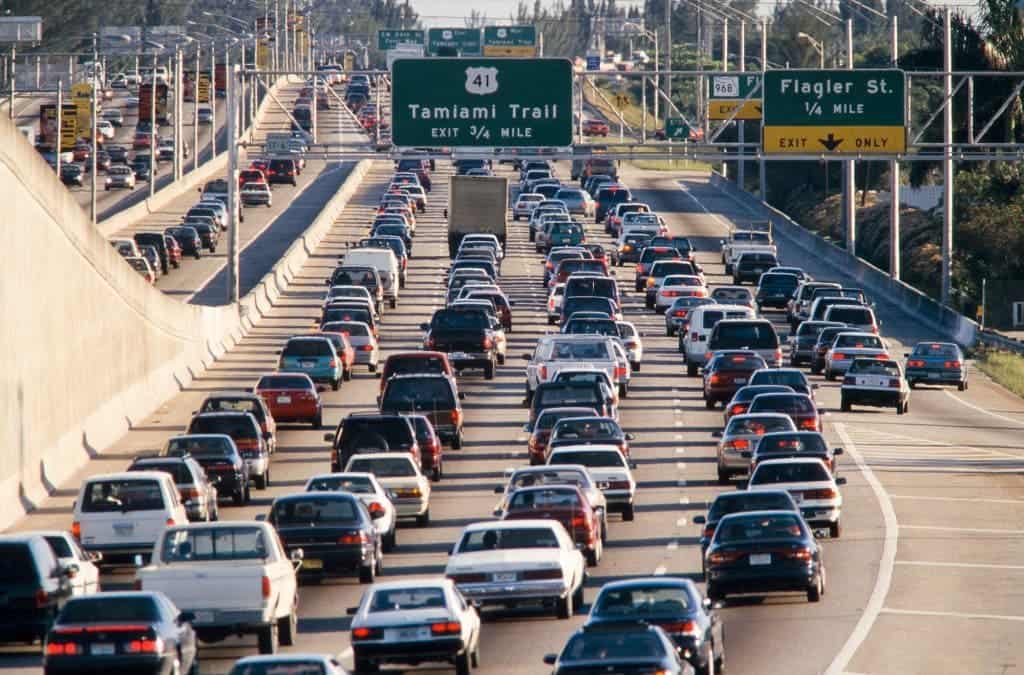
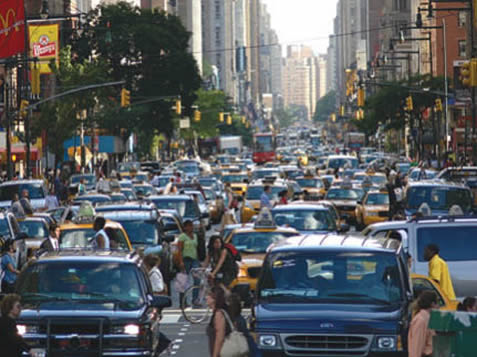
It’s difficult to notice just how dependent we are all on our cars unless it is explicitly pointed out.  We’re lucky enough to live in Burlington, where the effects of car culture are a bit less obvious, but since starting this course I now notice the massive amount of cars that are passing by all the time.  It is especially noticeable when you travel near a city such as New York or Boston, where the roadways can’t begin to contain the number of cars traveling during rush hour.


“During the long Cold War, freedom was held up as the key difference between the United States and the Soviet Union.  The daily repetition of this message implicitly linked the car even more firmly than it had been to American national identity” (Lutz, 17).

I found it really interesting to connect America’s car culture with the Cold War.  The struggle was a conflict between the world’s two greatest superpowers of the time, and the use of automobility as a symbol of the American way of life seems so blatant after reading Lutz’s book.  America was enemies against the Soviets because of the belief in democracy as the ideal government, the ability of its citizens to travel freely and without any obstacles was the picture perfect representation of that.


“The car is not only a major component of household spending, but its costs are often very unpredictable, giving families a sudden and painful financial kick in the shins.  Surveys show that one in three Americans in the past year had “unexpected expenses that created financial trouble,” or “seriously set them back” and, of those, fully one quarter was car-related” (Lutz, 81).

Much of Lutz’s book discusses how the average person does not take into account all of the costs that their car will demand.  Many only consider the price of the car and fuel costs, often forgetting about interest, insurance, maintenance, depreciation (especially if bought new), and repair from accidents.  I’m reminded of Sam’s deep dive video about the dad and son buying the Volkswagen from the old woman, where the dad makes the decision to buy the car after a few tests that tell him nothing about its state.  As the above quote shows, a quarter of Americans in financial trouble are in their situation because their car costs them more than they anticipated. 


“Progress always has a price, we tell ourselves, and some might argue that the suffering of people with cancer, lung disease, and asthma is a sad but inevitable cost of our beloved cars, our freedom, and our modern world itself” (Lutz, 174).

It’s unfortunate how many people believe that poor health is an acceptable consequence for modern progress.  This is, of course, not an inevitable outcome that cannot be avoided; we just need to change how we think about our cars.  The technology already exists for us to have zero-emission vehicles (Tesla), we just need to adapt as a culture to make these vehicles the norm rather than their internal-combustion counterparts.


“…safety innovations have caused people to drive less safely: straighter roads, wider lanes, partnered with a “smooth ride” and antilock brakes encourage people to drive faster and leave a shorter distance between themselves and the car in front” (Lutz, 180).

It seems counterintuitive, but the increased safety of cars and roadways has led to more dangerous driving by Americans.  A clear example is shown every time it snows heavily in Vermont; if you drive on the highway during a snowfall you’ll see multiple cars in ditches on the side of the road because the driver was being careless.  Even though cars get safer, the number of deaths remains roughly the same because people think, for instance, that if they have snow tires they are invincible in the snow.


“Typically, because the 112 Americans and 3,300 people worldwide who were killed by cars yesterday, or the 112 the day before that, didn’t die together, all at once, they didn’t make news” (Lutz, 181).

Americans often think of their car as a relatively safe place to be while also being terrified of flying.  One of the main reasons for this is that the national media reports almost every plane crash in the country, while at the same time ignoring the hundreds of fatal car crashes that occur each and every day.  If all of these deaths were reported in the same manner that airline disasters are, maybe people would see that there are other transportation options out there besides their car.


“Eighty percent of everything ever built in America has been built in the last fifty years” (Kunstler, Ch. 1).

I thought that this was an astounding fact, especially when you consider that it means eighty percent of everything built in the country has occurred during the era of the car.  Fifty years ago the car was already the main form of transportation for most Americans, meaning that only twenty percent of America’s infrastructure is from a time where trains and streetcars were as equally accessible as cars for most people.  It comes as no surprise that we are such a car-dependent culture when you realize that it was the focus throughout nearly the entire country’s construction.


“The devices in civic design that had adorned Europe – derived chiefly from the notion that the space between buildings was as important as the buildings themselves – did not jibe with American property-ownership traditions, which put little value in the public realm” (Kunstler, Ch. 4).

Americans pride themselves in what they are able to achieve as an individual, often disregarding what they can accomplish as a community.  The thought of using public land for collective purposes is lost on most Americans, as most would rather go straight to their private homes after work.  As Professor Watts stated in class, for every ten minutes that an American spends in their daily commute, they are 10% less likely to contribute to their community.  In many cities built before the car was invented, public squares dominate the center of the city; these public squares are noticeably absent in many American cities, where empty lots are regarded as wastelands.


“You might say the overall consequence is that we have lost our sense of consequence.  Living in places where nothing is connected properly, we have forgotten that connections are important” (Kunstler, Ch. 13).

The largest problem with American car culture is that the vast majority of people don’t know the consequences of their daily driving habits.  Using a car to get everywhere instead of exploiting other options has environmental effects that we are all well versed in, most Americans are unaware of what happens to the Earth when you pump large amounts of carbon into the atmosphere.  Electric vehicles, bicycles, walking, etc. are all better options than driving a car, and there usually is a viable alternative that wouldn’t add time to a daily commute.  If Americans were aware of the consequences of their internal combustion engines, they would probably use them only when necessary.


Samantha Leopold- Top Ten Revelations Final

Samantha Leopold’s Top Ten Revelations


1.       My first car revelation begins with the most complex living this in the known world:  the human brain.  Out of the 400 billion bits of information we are exposed to every second, our brains only pay attention to 2,000 bits of information.  We all of three brains:  the neocortex, the reptilian and the limbic.  Out of all of these brains, car commercials seem to only target one brain:  the limbic brain.  The limbic brain is responsible for our emotions and how we feel.  It is also responsible for processing images and music.  A picture says a thousand words and can have multiple meanings, but if we are just given words,  the “ah” factor is gone.  We simply analyze the words in front of us and use our neocortex to rationalize them.  Car companies target our limbic brains, because they want to and invoke a certain emotion out of us rather than regurgitating facts, whether it’s nostalgia or humor.  Car companies began selling cars strictly on the written word, but with technology and other factors there was an epistemological shift (a shift from word to image) and shifted our thought process from the rational brain to the limbic.   Consumers are more apt to by a car by watching a funny car commercial about a little kid dressed in a peanut costume, driving with Kobe Bryant, than reading a car statistic about good gas mileage.   In Carjacked Lutz says, “…automakers and salespeople admit that cars are generally sold on the warm, secure feeling they give the buyer as much or more than they are sold on cold, hard safety statistics.”  (Lutz, 179) Very few car commercials target our rational brain and if they do, it’s towards the end of the commercial.  Almost every student’s presentation targeted our limbic brain in one form or another and they were very effective advertisements.   Car companies know how our brains works and how to manipulate us to do what we want.  It’s scary, but what are we going to do about it?  Buy whatever car, because it promises us something that we cannot possibly retain without the car?  Absolutely.  That’s the power of the media.


 My second revelation was about our culture of automobility.  Before this class, I had no idea what automobility even meant.   I knew automobility had obviously something to do with cars, but I did not understand its relevance or significance.   Yes we have cars and we drive around in them, but so what?  After reading Cotton Seiler’s book “Republic of Drivers” I found out what automobility really meant and how it conquered our culture.  “The act of driving and all of those components that make driving possible, practical and empowering, fun, salutary, and imperative, which all together compose the entity called automobility.” (Seiler, 4)   Automobility is what our country is built upon between our infrastructure, economy, and our lives.  We have built this culture driven and dominated by the car, that is both amazing and extremely terrifying.  


3.    My third revelation occurred after the premier of Nelly’s “Come Ride Wit’ Me” music video.  Before this class, I had seen the video and heard the song, but I never really knew what the lyrics were or the significance of the automobile.  Thankfully, I now know all the words now and I will never see the song in the same way.  In the song, Nelly sings about his lavish lifestyle centered around his car.  The car in this video is represented as a status symbol of his success.  In the song he sings, “I feel the fame now, I can’t complain now, shit I’m the mayne now.”  The car is the epitome of his success and he is able go where he pleases, he can get whoever he wants, and he can pretty much do whatever he wants without any repercussions.  He’s made it and the car is evidence that he has.  “For this man and many others, the cars on display are the big carrots available to hose who work hard or win the lottery, and each, from the lowly Kia Rio to the regal BMW M-class, represents a rung on the ladder of success.”  (Lutz,2)  Nelly’s video and Lutz’s book exemplifies the meaning of the individual meaning automobile and how our culture views success.


4.       My fourth revelation was that the prominence of cars in our media.  Cars have infiltrated all forms of the media:  movies, television, YouTube, the internet, etc.  Cars are a part of practically every element of our lives, but what surprised me the most was the roles cars play in films.  I can’t think of a movie I have seen recently, that do not feature a car in one aspect or another.  In class, we watched “American Graffiti” directed by George Lucas and looking at the movie surface deep, the movie is about a group of high school kids transitioning to the next stage in their lives.  After learning more about automobility in this class, this movie is entirely based off of cars.  Cars are used as tools to transition from one scene to another.  Cars are used for character development and are used to introduce each character.  The movie describes the car culture of riding around town socializing, eating, drinking, fooling around, etc.  “…the car is not just a prop, but is often the central element for character development and dramatic intrigue, and remains central to Hollywood’s archetypal plots.” (Lutz, 7) Cars are much more than a metal cocoon to get a person from point A to B, they are much more and the film industry has captured these ideas and made movies out of them. 


5.       My fifth revelation was, the car is a symbol or a rite of passage for teens into adulthood.  I like majority of other 16 year olds in the United States, relished the day when we could finally get our drivers licenses and experience this long talked about “open road.”  In the movie “American Graffiti,” we were exposed to a group of high school students that were going their separate ways.   Cars were a symbol of status and freedom.  In the movie, if you didn’t have a car or knew someone with a car, you were nobody.  One of the characters, Steve, was headed off to college and he gave his nerdy, car-less friend, Terry, the keys to his car.  Once Terry had possession of the car, his whole persona changed.  He was driving around town, picking up ladies and became a man in a sense.  He became an entirely different character.  The car gave him confidence and he essentially matured in the film.  In “Carjacked,” the author talks about driving as a rite of passage into adulthood as well.  “Wow, I’m a grown-up.  I’m Independent.’… It’s like, you go through puberty, and then you go through cars.” (Lutz,20)  “…when I was 16 and I remember driving and being like, ‘I’m the shit now!”  (Lutz,20) Lutz essentially explains the transition Terry, like many other teens, go through during this transition in life and truly is a step toward adulthood.

 My sixth revelation is that driving is a privilege not a right.  I live in a middle class society of South Burlington, Vermont and owning a car or getting your license is the norm.  Through this class, I have been taught about the promises of freedom and individuality the car brings the driver, but not everyone has this luxury.  In “Carjacked” and “Republic of Drivers” the authors talk about the inequalities associated with driving and car ownership.  Driving used to be extremely restricted and still is in some cases.  Only upper-class white males could drive.  Women, African Americans, and the impoverished did not have this right.  “Mobility is ostensibly a universal right; yet it has been and remains a prerequisite of social, political, and economic power, insofar as its true goal is “not movement as such, it is access to people and facilities.”" (Seiler,23)  Car ownership is still not accessible to everyone and people are looked down upon because they ride a bus or a bike from place to place.  Lutz in "Carjacked" talked about the big open windows on the public buses to show the humiliation of the riders.  Our culture has not deemed public transportation as a proper way to travel, yet the bus does not discriminate who can ride and who can't.   Our culture and our media has ingrained the importance of car ownership into our heads that anything less is unacceptable.  If car ownership and driving is so important to our culture it should be accessible to everyone and no longer a privilege.  


7.       My seventh revelation was that the automobile is a reflection of us. “What I have with my car is definitely a relationship.  It’s definitely a part of me, part of my personality.” (Lutz,28)  This quote from Lutz’s book reminds me of the car PSA from my classmates Nate and Ben.  They did an excellent job portraying the idea of the car being our best friend.  Car owners are most definitely in relationships with their cars.  People spend hours a day sitting in their cars, eating in their cars, and listening to the news or music.  People definitely have a relationship with their cars and they decorate their cars to be a reflection of themselves.   They bedazzle their cars with bumper stickers, antenna ornaments, or what have you to make their massed-produced cars their own.  There is even a show about personalizing cars and some of my classmates made a spoof about it, “Pimp my Ride”.  “People don’t know us, but they know our vehicle.” (Lutz, 29)  In my high school class, who were defined by their car.  It has become a normal thing.  The car defines us, as much as we define the car. 


8.       My eighth revelation is that cars are unhealthy and are essentially metal death traps.  I have been taught that cars promise freedom and individuality, but rarely do I, or anybody else, ever hear the negative side of cars. Our culture of automobility is built around highways, fast food restaurants, and our infrastructure was built to ensure quality time with our vehicles.  When we go on road trips or if we are in a hurry, the only accessible, fast food is located from drive-thru windows.  We eat unhealthy food from our cars and then we sit and idle in our cars for sometimes hours on end in a given week.  We pollute our environment and our lungs, yet we still continue to drive and we do not alter our behavior.  We are dependent on our cars even though they are slowly and potentially killing us.  Lutz goes in depth on this subject matter, but the facts that she wrote about that haunts me the most is about the fatalities caused by cars.   “As a nation, we are nearly three times more likely to be killed in a car crash than by homicide, and our children face no greater risk of dying from any cause, accidental or disease-related.” (Lutz, 181)  Cars are public enemy number one, yet we still continue to drive them.  Cars are definitely not this safe haven that the media portrays them to be.  I keep asking myself if the health risks are worth the drive to school or to the grocery store.  Walking sounds better and better after reading “Carjacked.”


9.       Cars are an economic burden is my ninth revelation.  Our culture has transitioned from one car households to multiple ones.  My household owns four cars for five people, giving our household a car ratio of four to five.  “The car is not only a major component of household spending, but its costs are often very unpredictable, giving families a sudden and painful financial kick in the shins.” (p.81) Majority of Americans don’t realize the impact a car has on their household budget. They may consider gasoline costs to fuel their cars, but forget about the potential costs of repair, insurance, loan payments, or tax burdens.  Cars are not built to last forever, yet we treat them like they will.  We dump so much money into our vehicles that we will never get back.  Cars are an extremely bad investment, yet we continue to buy more cars and fuel our culture of automobility.  “The $4500 it costs to own and operate a car each year could cover a year’s payments on a $30,000 mortgage.”  (Kunstler, 183)  I still find it shocking how much money it costs to own and operate a car, but more astounding how some of these families would rather make a car payment than their mortgage.  I would think a roof over their family’s heads would be more important, but our bonds with our cars are so strong, we cannot break those ties.  It goes against our values and our culture of automobility.  It’s un-American to not own a car, so we will do anything in our power to have one or keep one.  Unless we change our car paradigm or cars become more affordable and more accessible to everyone, cases of economic jeopardy will continue to happen.  After all of these readings, I am strongly considering buying a bike, buying a bike pass, or using my legs more often. 


1    My tenth and last revelation is that I never realized how cars are the reason our landscape is the way it is.  Kunstler’s book “The Geography of Nowhere” really opened my eyes on how our landscape has been molded around our culture of automobility.  “Americans have been living car-centered lives for so long that the collective memory of what used to make a landscape or townscape or even a suburb humanly rewarding has nearly been erased.”  (Kunstler, 113)  Where we live, where we work, where we shop, where we eat took a backseat in planning our landscapes, because we had a mode of transportation that could bring us anywhere, anytime. With this mindset, we created urban sprawl and we have accommodated our automobiles rather than ourselves. Our landscape is covered in roads, highways, interstates and billboards galore to get us to buy something as we drive around.In doing so, we have fueled a lot of the issues we faced today like traffic congestion and commuting multiple hours a week.  Cars are part of our cityscape and are ultimately responsible for the way our landscape looks today.  I still wonder what our landscape would look like, if cars were never invented.  


Ben Kaufman's Top 10 Revelations

1) Cars are much more pervasive and invasive than one can imagine. The fact that “there is no spot in the lower 48 of the United States more than 22 miles from the nearest road”(Carjacked 6) exemplifies that the great American wilderness has been explored and conquered.  Where the car once meant escape from society, now it simply represents a common practice for moving about in society. 


2) The design of our communities has led to increased car dependence.  We no longer live in downtown areas, as downtowns are becoming more and more sparse as people move to the suburbs.  Large box stores which offer all goods in one place take the market of small shops.. Our suburban sprawl home ‘towns’ are "lacking any center, lacking any shops or public buildings, lacking places of work or of play" (geography of nowhere, 14), and instead resemble household islands connected only by car patrolled roads.  Without a central shopping area or businesses near our homes, we must drive to get food or goods.


3) Our increased car dependence leads to decreased health, which leads in turn to increased car dependence.  When we drive, we aren’t exercising at all in our travels.  As a bus or subway rider, and especially as a biker or pedestrian, one must expend energy to get from place to place. In a car, you sit in a seat and go to your destination, in fact “the Centers for Disease Control has placed a good portion of blame for the problem of obesity in the united states squarely on”(162 carjacked) cars.  There is very little walking involved from the inevitable parking spot to your overall end goal, as compared to the walk from a train station to a nearby business.  Additionally, from our cars we are polluting the air that pedestrians travel in.  Our driving decreases both our health through our sedentary disposition and pedestrians’ as they breath in our exhaust, making it harder to travel outside of a car, and making it more likely that people travel using cars.


4) We love our cars as if they were animate objects to the extent that we put them above many animate objects.  We name our cars.  We spend money on them when we shouldn’t.  They are an expensive habit, and can result in consequences like the ones felt by one poor woman after “Four years and a total of $27,000 later, she [found that she] had no car, no savings, and ruined credit”(79 carjacked).  Cars are branded as a good investment, but in reality they are a money sink that only loses its value over time.


5) There is a ridiculous amount of government spending on maintaining car culture as it is today, but it would cost a lot to change the infrastructure to a new design too.  Driving requires constant refurbishing, redesigning, and rebuilding of roadways, which adds up to tax spending around “$30 billion a year on transportation, the great majority of which was to build and repair roads and bridges used primarily by cars and trucks”(10 carjacked).  This money comes out of every adult’s pocket in the U.S. and could be used for much better purposes, such as improving spaces for bikes: a much less space intensive means of traveling.


6) All car names are about escaping.  The car symbolized how to get away from society and the “model names invite the driver to see his or herself as an explorer in nature” (16 carjacked). The Explorer, Quest, Odyssey, Range Rover, and even the obvious Escape are often pictured alongside cars in ads where the car is off in the wilderness on a lone road, or off-roading in the mud and snow.  Most often people do no use their vehicles in this glorified fashion, but an image of a car in miles of bumper-to-bumper traffic is much less appealing for some reason.


7) Car purchases aren’t made entirely on facts usually, but are based on the limbic and reptilian brain as well.  Car ads play highly to a buyer’s emotions, making them want to drive a car based on how it makes them feel, rather than the facts (MPG, safety, cost) about the car. Today, "buyers are much more likely to be in the market because they are tired of the current car"(64) due to advertising campaigns that make viewers always want to buy new ones to stay up to date with features. Each car represents a different niche, and “selling cars is like selling perfume or this year’s fashions”.


8) You often judge a person by their car.  Successful business people drive nice cars, if they don’t their work is impaired.  Teenagers are bad and reckless drivers, girls drive certain cars and men others.  Individually, “We become attracted to a class of car or a bran because of the soft or emotional appeal of its marketed image”(41 carjacked) which are specifically designed to target our individual demographics.


9) People miss out on many opportunities if they can’t afford a car and “the poor often live in rural areas or inner city neighborhoods far from the areas where jobs are now most plentiful”(104 carjacked), and lack of car ownership makes it hard to escape these confines. You physically cannot have certain jobs that require a car; one unhappy employee was offered a raise but “couldn’t accept the job because I had no way to get”(104 carjacked) to the new office. Not having money to buy a nice car can lead to more frequent mechanic trips, and missed work further continuing the cycle.


10) Our cars make us less likely to interact with other human beings. One of the most universal interactions is the sharing of food, but “because we so often drive alone, and we so often eat on the road, we often eat alone”(163 carjacked). The small connections with our fellow humans are most often represented through anger at other “cars” for not doing the right thing.  You almost never meet the person behind the wheel of car, and never realize that they might be someone who you can relate to and isn’t a waste of space on this beautiful planet we are forced to share.  


Thank you for an amazing semester! I learned more than I ever expected, and had way more fun than I thought I could in class.  


Top Ten Revelations - Will Romeo


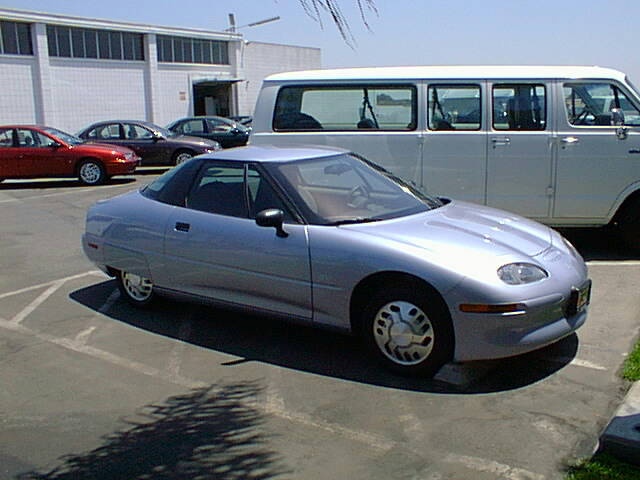
1.            The Electric Car was a thing?!

Until we watched “Death of the Electric Car” in class I actually had no idea that the EV-1 once roamed the streets of our automobile dystopia. This reminded me of Seiler’s notions of government propaganda to promote roads, the interstate, and the act of driving. Through this propaganda “People’s Capitalism would be ‘the greatest advertising and public relations campaign this country has ever known- a campaign with the single objective of reeducating the American people to our way of life’”(Seiler 79). The death of the electric car illustrates what kind of propaganda power companies like General Motors has and how they have “reeducated” the American people to buy Hummers and devour gasoline. “Global warming is not a real thing, well prove it to you. Come buy our off-roading gas guzzling vehicle with no repercussions!”- That’s how I envision GM to think anyway. With that sort of diversion propaganda GM could smoothly pull the EV-1 off the road with little attention to it, sly.


2.                  The Electric Car is the Best Alternative Option

Before this class I thought that hydrogen fuel cells would be the best option for alternative energy solutions. However, I never realized how much technology has already been researched and adapted to the idea of the electric automobile. Electricity is the most convenient method of power, due to its accessibility almost everywhere now, and since there are already power stations up, ready to charge, it would make the most sense to invest in electricity. Now, it is environmentally necessary, some “effects of CO2 levels have already made refugees of some people living in low lying atolls in the Pacific Ocean” (Lutz 174).  Also according to Lutz “cars and trucks produce five primary groups of pollution; carbon monoxide; nitrogen oxides; toxins including benzene; VOCs; and fine particulate matter” (163). The concept of the electric car is no longer such a foreign idea to society and is something more and more people are willing to be more open too to help save the planet. Plus, a hydrogen fuel cell in the back of a car mixed with the drivers we see today, doesn’t look like a very great option.


3.                  Everyone is a Self-Curator

In “disdain of efficiency” people will do whatever they can to project their personal image through an automobile (Seiler 9). This self-creation through the automobile formed different subcultures among populations that that reflected race and ethnicity. From “white working class ‘hot rods’ or ‘stock car’ enthusiasts, Chicano/Latino and African American ‘low-riders,’ as well as more recent Asian American ‘import street racer,’” one can see how many different cultures have been affected and shaped by the automobile (Seiler 9). Although not generally very practical, these automobiles are a reflection of its driver and the socioeconomic status the driver wants to portray. This option of self-curating allows the driver to be an individual within each subculture, furthering our love and desire of being one’s own person.


4.                  Autonomy=Freedom

Trapped in society and ruled by “the man,” the automobile allows us to feel from everything. “For what is freedom? The power to live as you will,” and the automobile gives us that power (Seiler 132). Besides police, one’s self-governance can take control and now you are on your own terms. You can speed down back roads barely gripping on to the road as you throw the weight of the car into a sharp turn, or you cruise around downtown and enjoy the weather in your convertible, the choice is yours. We are all cowboys out there and as a cowboy “I ride my horse where I want to go” and I have the freedom to do so (Lutz 133).


5.                  The Car can be the Great Equalizer

Cars represent one’s socioeconomic status and being able to own a car gives a sense of equality to others that own one as well. Seiler says speed has always been “a particularly important element” in the world of drivers and I find that totally understandable (43). For instance if one is speeding down the highway and someone else joins in, for that time on the road, they are equals- going the same speed, sharing the enjoyment of traveling faster than others. If a black man and a white man are going the same speed, they are equals. The construction of the interstate was also a huge factor as an equalizer in society. “All interstate in the Deep South felt much like an interstate in the North,” allowing African Americans equal opportunity to move (126 Seiler).


6.                  Rush Hour will only Get Worse until it gets Better

 
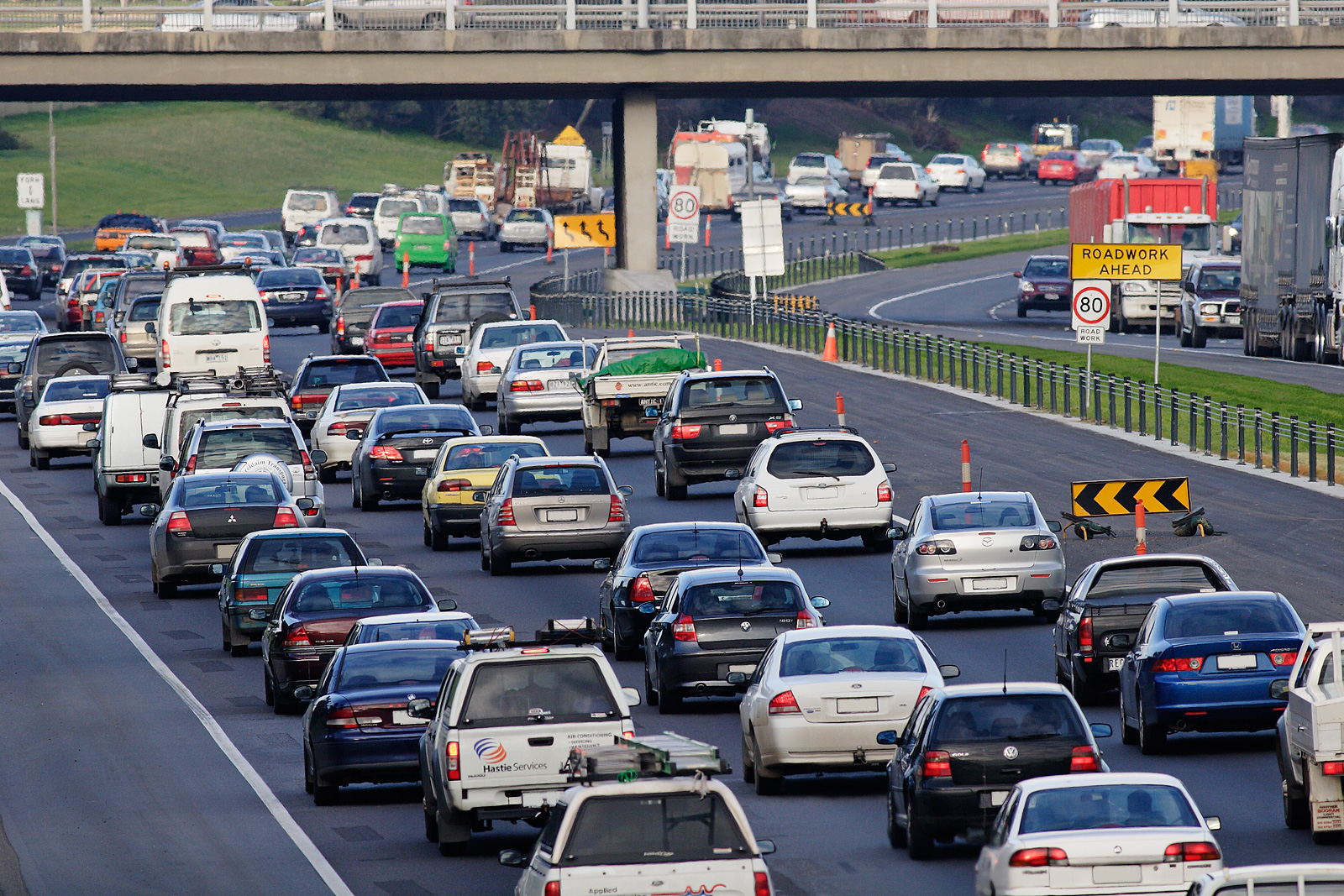
“Nationally the rush hour- defined as the peak hours of travel when roads are most congested – has expanded to more than six hours a day” (Lutz 130). With rush hour totaling more than 12 hours of everyday we now have a desperate call to figure out new, more efficient means of mass transit and personal transit. Massive amounts of pollution are caused by gridlock and the amount of cars trapped in it. Public transit needs to take a 90 degree turn in order to address this problem and more efficient means of commuter transit must be available. As well as having a technological shift we must see a shift in culture. The idea that only “lame” people ride the bus needs to be switched to a more appreciative view that people don’t have to drive themselves everywhere.


7.                  We Gave One Freedom up for Another

With the notion of freedom on the road I have also noticed how much of an oxymoron it can be. Most police encounters people have of police are involved with their automobile, whether it’s a speeding ticket or a traffic stop it seems that the only time most people get involved with the cops is on the road. Lutz says “we have to accept the remarkable levels of government control for the sake of the automobile” (113). To me it seems that I never feel too free on the road since I am generally on the lookout for police vehicles, even if I am going just 5 mhp over the speed limit. How free are we really since we can’t experience the full power and potential of our vehicles without getting in trouble from the law?


8.                  Marketing is a Double-edged sword

While we think marketing always appeals to the sides of us we like best, there is an awful lot of deception in the marketing field, especially with the automobile. Automobile companies, like Nissan for example, will use anthropological research to create emotional connections with its target audience. With this research, advertisers can construct media “evaluating their [consumers] concerns and validating their desires” (Lutz 46). “Marketers know what we don’t like to admit to ourselves: we are a lot like a lot of other people,” so they snatch on to this idea and suck the life out of it, making the consumer feel “unique.” They are a conniving force that can appeal to our strengths and insecurities and persuade us to buy anything.


9.                  The Automobile Destroys Towns

Once, towns were built with structure close together, creating a sense of community and belonging that were easy to navigate by walking, like Burlington. Now towns are built to “accommodate automobiles at the expense of the pedestrian” (Kunstler 135). Structures are now spread out and our reliance on the automobile thickens. Since towns are actually built around the use of cars, every individual needs an automobile just for daily life. This reliance on the automobile puts a dent on the earth and in your wallet. With smaller, closer communities citizens can walk more places reduce their dependence on the use of the automobiles, while becoming a healthier persons. It’s a win-win situation.  


10.              Have We Even Arrived Anywhere?

The automobile has seemed to make much of what we travel through mundane. Once leaving us in awe and marvel, now we see much less emotion through the act of driving. “There is little sense of having arrived anywhere, because everywhere looks like no place in particular” (Kunstler 131). The adventure and journey of driving has lost its wonder and amazement among the masses and since most places are built around the automobile most towns don’t look too much different from each other. We need to rediscover the art of driving and the idea of just going where the road takes us.